 Facts Rodeo



🦖 Meet the Tyrant King
The mighty T-Rex wasn’t just another dinosaur — it was the superstar of the Cretaceous.
- The name Tyrannosaurus rex means “tyrant lizard king.”
- It lived around 66 million years ago during the late Cretaceous period.
- Despite its fame, only about 30 good-quality skeletons have ever been found.
⚔️ Apex Predator Life
This was a creature built for dominance, ruling its ecosystem with raw power.
- T-Rex could reach lengths of up to 40 feet and weigh over 9 tons.
- Its bite force may have exceeded 8,000 pounds — one of the strongest of any land animal ever known.
- Paleontologists believe it hunted both live prey and scavenged when convenient.
🦴 Teeth, Jaws, and Terrifying Tools
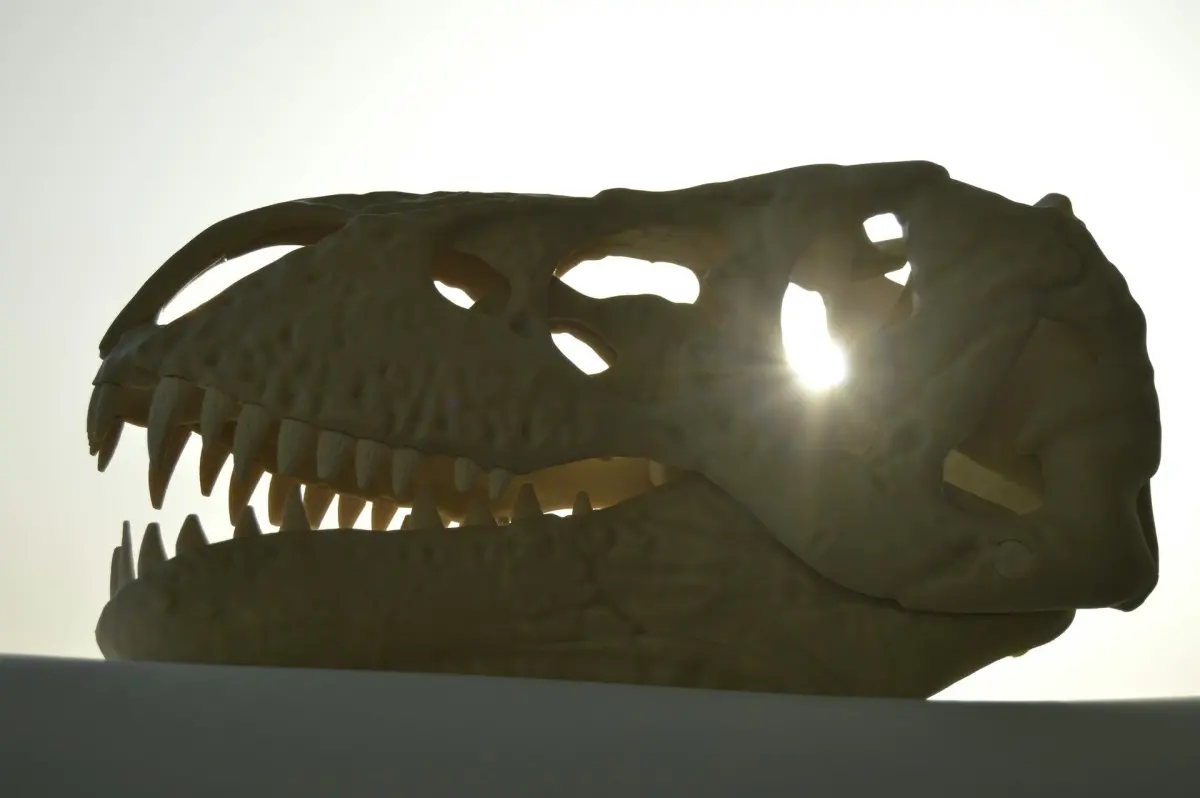
Everything about its skull was engineered for destruction.
- A T-Rex had about 60 serrated teeth shaped like bananas 🍌.
- Some teeth reached lengths of over 12 inches including the root.
- As they wore down, new teeth continuously grew to replace them.
👣 How It Moved
Surprisingly agile for its size, T-Rex wasn’t the slow plodder old movies showed.
- Most scientists estimate it walked at about 4–5 mph — a human jogging pace.
- Its massive tail acted like a counterbalance to keep it steady while moving.
- Tracks suggest it moved with a confident, ground-shaking stride.
🧠 Brain & Senses
The tyrant king wasn’t dumb — far from it.
- T-Rex had an unusually large olfactory bulb, giving it an excellent sense of smell 👃.
- Its binocular vision may have been better than that of a modern eagle.
- Brain studies show it had strong motor control and sensory processing abilities.
🧬 Feathers or Scales?
A long-running debate: what did the tyrant king really look like?
- Fossil skin impressions show mostly scales on the adult T-Rex.
- But many paleontologists think juveniles may have had a light dusting of feathers 🪶.
- This mix of traits shows how diverse dinosaur skin coverings really were.
👶 The Life of a Baby T-Rex
The tyrant king started surprisingly small and vulnerable.
- Hatchlings were probably no bigger than a large turkey.
- Young T-Rexes were lean, fast, and filled a different ecological niche than adults.
- Their rapid growth rate — adding hundreds of pounds per year — is one of the fastest known among dinosaurs.
🦕 Family, Behavior & Social Life
Scientists are piecing together clues about how T-Rex actually lived day-to-day.
- Some evidence suggests T-Rexes may have hunted in loose groups 👥.
- Bite marks on fossils show they sometimes fought each other — or engaged in rough courtship.
- Healed injuries reveal these giants often survived brutal encounters.
🧱 Why We Love the T-Rex
The king’s legend endures, shaping pop culture and our understanding of deep time.
- T-Rex is one of the most studied dinosaurs in history, reshaped constantly by new discoveries.
- Its fame skyrocketed thanks to movies, museums, and its iconic skeleton pose 🦴.
- The creature symbolizes Earth’s wild past — powerful, mysterious, and unforgettable.