 Facts Rodeo

🏛️ The Empire of the Dead
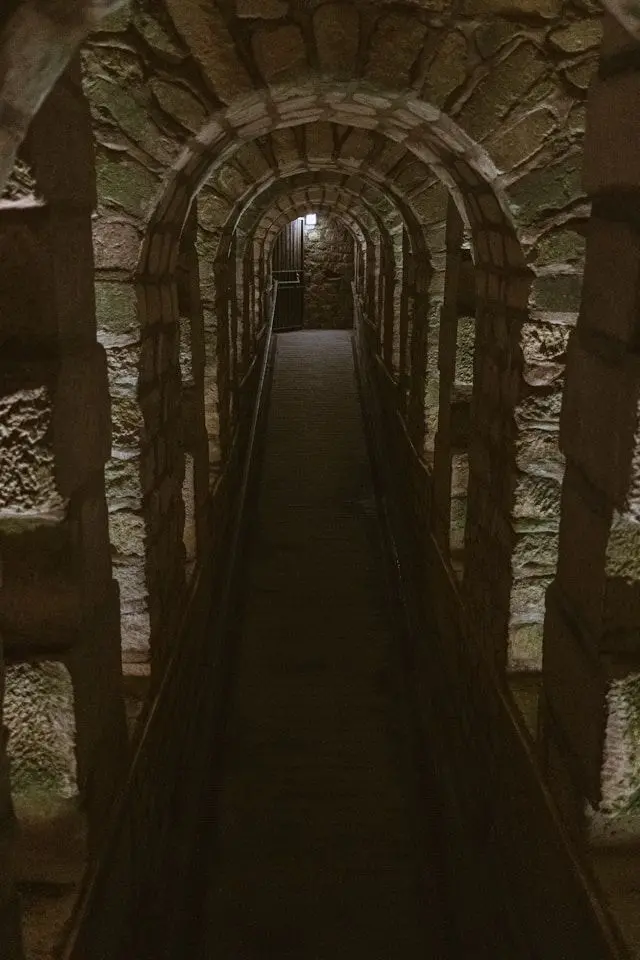
Beneath the City of Light lies a dark, silent empire built from the bones of its past residents.
- The Catacombs hold the remains of approximately six million people, transferred from overcrowded cemeteries in the late 18th century.
- This underground ossuary stretches for nearly 320 kilometers (200 miles), though only a small fraction is open to the public.
- Workers known as cataphiles secretly arranged skulls and tibias into macabre patterns, like hearts and barrels.
- The entrance for the official tour is a discreet green shack at 1 Avenue du Colonel Henri Rol-Tanguy.
- Walls are lined with inscriptions like "Arrête! C'est ici l'empire de la Mort" (Stop! This is the empire of Death).
- The bones are stacked in a former quarry, with the tunnels dating back to Roman times. 🦴
🕵️♂️ The Cataphile Subculture
A hidden community of urban explorers has turned the underground into a place of mystery and rebellion.
- Cataphiles are individuals who explore the forbidden parts of the network, often through secret manhole entrances.
- They have created fully furnished rooms, complete with electricity, movie projectors, and even bars and restaurants. 🍷
- The police have a special unit, the cataflics, whose job is to patrol the tunnels and fine trespassers.
- Underground parties and film screenings are legendary, with invite-only details shared through word-of-mouth.
- Explorers use detailed maps, but the network is so vast that new chambers and connections are still being discovered.
- Some cataphiles have carved intricate sculptures and murals directly into the limestone walls.
💧 The Lost Rivers of Paris
Paris wasn't built just on the Seine; it was built over a web of waterways now forced underground.
- The most famous buried river is the Bièvre, which now flows entirely in a sewer pipe after being covered in 1912.
- Other lost streams include the Grilles, Ménilmontant, and Belleville brooks.
- These rivers were used by tanneries and other industries, which heavily polluted them, leading to their eventual covering.
- You can still see where the Bièvre empties into the Seine, near the Austerlitz railway station.
- Urban explorers sometimes kayak through the flooded collector tunnels during heavy rains. 🚣♂️
- The ghost of these rivers can be seen in the sloping streets and valley-like dips in the city's topography.
🔐 Secret Bunkers & Hideouts
From revolutionaries to governments, the underworld has always provided the perfect cover.
- Beneath the Palais de Chaillot lies a massive bunker built for the French military in the 1930s.
- During World War II, the French Resistance used the catacombs and quarries as hiding places and headquarters.
- A secret chamber was discovered in 2004 containing a fully equipped cinema, complete with a screen and projector.
- There are rumored to be tunnels leading directly from the Louvre and other major landmarks for official use.
- During the Cold War, the government maintained a bunker beneath the Gare de l'Est train station. 🚂
- Some quarries were converted into mushroom farms, producing the famous Parisian champignon de Paris.
🚇 The Métro's Hidden Stories
The city's famous subway system has its own labyrinth of abandoned stations and tunnels.
- Station Porte des Lilas is a "ghost station" used primarily for film shoots, like in Amélie.
- The abandoned Saint-Martin station, closed since 1939, still has its original vintage advertising posters on the walls.
- A secret metro line, La Petite Ceinture, was a circular railway that is now largely abandoned and overgrown. 🌿
- The RATP (public transport authority) has its own police force and even a movie studio in the tunnels.
- There is a network of narrow-gauge railway tracks used for maintenance, accessible only to workers.
- During the Nazi occupation, some stations were used as air-raid shelters and even secret factories.
🍄 The Quarrymen's Legacy
The very foundation of the city was carved from its belly, leaving behind a fragile landscape.
- The limestone extracted built iconic structures like the Louvre, Notre-Dame, and many Haussmannian buildings.
- To prevent collapses, a dedicated team of Inspection Générale des Carrières (IGC) still maps and reinforces the quarries.
- The IGC's headquarters is located in a historic building at 76 Avenue du Général Leclerc.
- Quarrymen left behind detailed engravings and signatures on the walls, some dating back to the 1700s.
- There are catacombs under the catacombs—deeper levels that are even more dangerous and unstable to navigate.
- Major streets have "inspection galleries" running beneath them, allowing engineers to check the ground's stability.