 Facts Rodeo

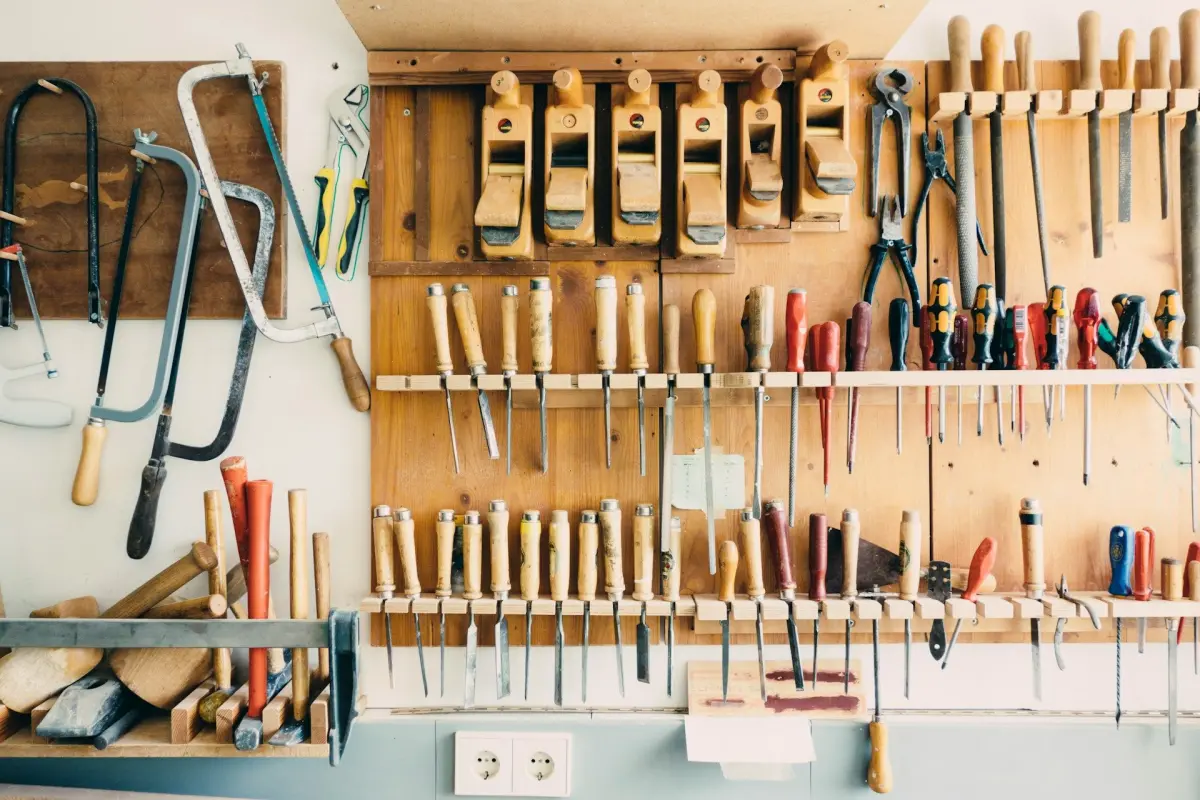

🛠️ Your First Workshop
Setting up your own creative space is the first exciting step on this journey.
- You don't need a massive garage; a corner of a room or a small balcony can be a perfect start.
- The Workbench is your command center; a sturdy, flat surface is more important than a fancy one.
- Good lighting is a woodworker's best friend, preventing eye strain and ensuring accuracy.
- Start with a basic tool set: a hammer, tape measure, combination square, chisels, and a hand saw.
- A sharp pencil is one of the most precise tools you own—always have one handy. ✏️
- Organize your tools from day one; you'll spend less time searching and more time building.
📐 Measuring & Marking Matters
Precision here saves a lot of headache later. The old adage is true: measure twice, cut once.
- A quality tape measure is worth its weight in gold. Check its end hook for any play.
- Use a marking knife or a sharp utility knife for more precise lines than a pencil.
- Always use the same measuring tool for a single project to avoid slight variations.
- For perfect right angles, a combination square is an indispensable multi-tool.
- Mark the waste side of your cut line clearly so you know exactly where to saw.
- When transferring measurements, use a story stick (a marked piece of wood) for complex projects to ensure consistency.
🌳 A World of Wood
Understanding your material is like a chef knowing their ingredients. Each type of wood has its own personality.
- Wood is categorized as either Hardwood (from deciduous trees) or Softwood (from coniferous trees).
- Pine is a soft, affordable, and great wood for practicing and building rustic furniture.
- Oak is a strong, durable hardwood known for its prominent grain and beautiful finish. 🍂
- Maple is a very hard, light-colored wood often used for cutting boards and butcher blocks.
- Wood moves! It expands and contracts with changes in humidity; always account for this in your designs.
- Look at the end grain to understand the wood's structure and how it will behave when cut.
✂️ The Art of Cutting & Shaping
This is where your project starts to take physical form. Patience and a sharp tool are key.
- A sharp hand plane can create glass-smooth surfaces and perfect edges, a truly satisfying tool to master.
- When sawing, let the tool do the work. Use long, steady strokes instead of forcing it.
- For curved cuts, a jigsaw or a coping saw is your go-to tool.
- Chisels are for paring and chopping. Always chisel away from your body and keep them razor-sharp.
- A router is incredibly versatile, able to create decorative edges, grooves, and joints.
- Sand with the grain, not against it, to avoid unsightly scratches that are hard to remove.
🔩 Joining Wood Together
Strong joints are the skeleton of any well-built piece. They can be simple or complex, but they must be sound.
- The butt joint is the simplest but weakest; it's best reinforced with glue blocks or screws.
- A pocket-hole joint is a modern, strong, and beginner-friendly way to join wood at an angle.
- The mortise and tenon is a classic, incredibly strong joint used for centuries in furniture making.
- Dovetail joints are the gold standard for drawer construction, renowned for their strength and beauty. 🔒
- Wood glue, when applied correctly, creates a bond that is often stronger than the wood itself.
- Always do a "dry fit" of all pieces without glue to ensure everything comes together perfectly.
🎨 The Magic of Finishing
This is what brings out the beauty and protects your hard work for generations to come.
- Always sand progressively through the grits (e.g., 120 -> 180 -> 220) for a silky-smooth surface.
- Remove all sanding dust with a tack cloth or compressed air before applying any finish.
- Oil finishes (like tung or linseed oil) penetrate the wood, enhancing the grain and offering a natural look.
- Polyurethane provides a very durable, protective plastic-like coating, ideal for table tops.
- Apply finishes in a well-ventilated area and wear appropriate safety gear like a respirator.
- Multiple thin coats always yield a better result than one thick, drippy coat. Patience pays off! ✨
😌 Safety First, Always
Respect your tools, and they will serve you well for a lifetime. There are no shortcuts with safety.
- Always wear safety glasses. It only takes a single splinter to cause permanent eye damage.
- Hearing protection is crucial when using loud power tools like routers, planers, and table saws.
- A dust mask or respirator is non-negotiable; wood dust can be harmful to your lungs.
- Keep your work area clean and free of tripping hazards. A tidy shop is a safe shop.
- Know where your fingers are at all times in relation to cutting blades and bits.
- Never remove safety guards from power tools. They are there for a very important reason.