 Facts Rodeo
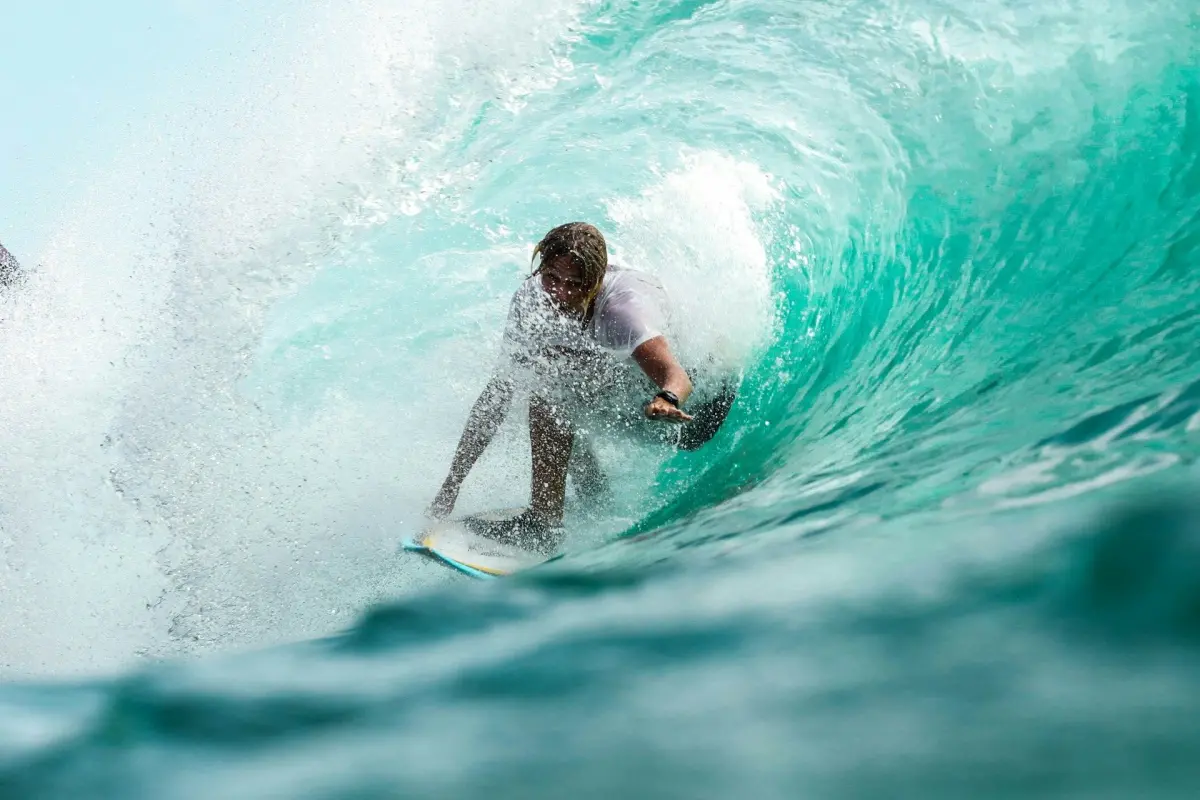

🌊 The Call of the Ocean: Understanding Big Wave Surfing
Big wave surfing isn't just a sport; it's a profound dance with nature's raw power. It's where the most courageous athletes pit themselves against liquid mountains, chasing the ultimate adrenaline rush.
- Big wave surfing generally refers to riding waves over 20 feet (6 meters) high.
- It demands an extraordinary blend of skill, courage, and respect for the ocean's immense power.
- The sport pushes human physical and mental limits to their absolute breaking point.
- Surfers often need specialized equipment, including longer boards and personal watercraft for tow-in assistance.
- Each ride is a unique, life-altering experience that can last mere seconds.
- The biggest waves are typically generated by powerful storms far out at sea.
- Only a small, elite group of surfers worldwide dedicate themselves to this extreme discipline.
🏄♂️ Pioneering Giants: The Legends Who Dared First
Before the jet skis and advanced forecasts, a handful of fearless individuals paddled into behemoths, forever changing what was thought possible on a surfboard.
- Greg Noll, known as "Da Bull," was famous for charging massive waves at Waimea Bay and Makaha in the 1950s and 60s.
- Eddie Aikau was a legendary Hawaiian big wave surfer and lifeguard, tragically lost at sea in 1978 while on a Polynesian voyaging canoe.
- Pat Curren, father of three-time world champion Tom Curren, was a pioneer at Waimea Bay in the late 1950s, riding waves up to 30 feet (9 meters).
- The Duke Kahanamoku Invitational Surfing Classic at Waimea Bay was instrumental in shaping the early big wave scene.
- Surfers like Buzzy Trent were among the first to truly comprehend and articulate the physics and dangers of large waves.
- In the early days, surfers had to rely solely on paddling power to catch these colossal waves.
- These pioneers laid the groundwork, inspiring generations to come to chase bigger and bigger swells.
🏆 Modern Titans: Redefining the Edge
Today's big wave surfers are not just riding giants; they're constantly rewriting the record books, aided by technology and sheer athletic prowess.
- Garrett McNamara famously surfed what was then a world record wave of 78 feet (23.8 meters) at Nazaré, Portugal, in 2011.
- Brazilian surfer Maya Gabeira holds the Guinness World Record for the largest wave ever surfed by a woman, measuring 73.5 feet (22.4 meters) also at Nazaré in 2020.
- German surfer Sebastian Steudtner currently holds the overall Guinness World Record for the largest wave ever surfed, an incredible 86 feet (26.2 meters) at Nazaré in 2020.
- Kai Lenny is renowned for his versatility, excelling in tow-in, paddle-in, and foil surfing on massive waves across the globe.
- French surfer Justine Dupont is another leading female figure, consistently tackling monumental swells at spots like Nazaré.
- Hawaiian legend Laird Hamilton is credited with pioneering tow-in surfing, allowing surfers to catch waves previously deemed unrideable.
- These athletes combine rigorous physical training with deep ocean knowledge to conquer the seemingly impossible.
📍 The World's Most Fearsome Breaks: Where Giants Roam
Certain locations around the globe are legendary for consistently producing the monstrous waves that attract the world's bravest surfers.
- Nazaré, Portugal 🇵🇹: Home to the world's biggest waves, often exceeding 80 feet (24 meters), due to a massive underwater canyon.
- Jaws (Pe'ahi), Maui, Hawaii 🦈: Famous for its massive, fast-moving, and hollow waves that can reach heights of 70 feet (21 meters).
- Mavericks, California, USA 💀: A cold-water break notorious for its bone-crushing waves up to 60 feet (18 meters), breaking over a shallow reef.
- Waimea Bay, Oahu, Hawaii 🌺: A historic spot on the North Shore, known for its powerful winter swells that regularly exceed 30 feet (9 meters).
- Teahupo'o, Tahiti 🌊: While not always the tallest, it's famous for its incredibly thick, heavy, and dangerous waves that break over a shallow coral reef.
- Shipstern Bluff, Tasmania, Australia 🇦🇺: Infamous for its freezing waters, remote location, and terrifying "steps" that form on the wave face.
- These breaks are often characterized by deep offshore canyons or reefs that amplify ocean swells into colossal waves.
⚙️ Cutting-Edge Gear: Tech for Taming the Titans
To survive and thrive in the biggest waves, surfers rely on highly specialized equipment and innovative technology that has evolved rapidly over the years.
- Tow-in surfing uses jet skis to pull surfers into waves too fast or big to catch by paddling, allowing them to tackle even larger swells.
- Specialized big wave boards are typically much longer and heavier, ranging from 9 to 12 feet (2.7 to 3.7 meters) for paddle-in, to 5-7 feet (1.5-2.1 meters) for tow-in boards.
- Inflatable safety vests, often called impact vests, contain CO2 cartridges that can be deployed to rapidly bring a surfer to the surface after a wipeout.
- Two-way radio communication between the surfer and jet ski driver is crucial for safety and wave positioning.
- Stronger, thicker leashes are used to keep the surfer connected to their board, though even these can snap under extreme force.
- Fin systems are often customized for maximum hold and control in turbulent, high-speed conditions.
- Many surfers wear helmets to protect against impact with their board or the water during massive wipeouts.
☠️ The Perilous Path: Dangers of Big Wave Surfing
The beauty of big waves hides immense danger. These athletes face some of the most extreme risks in any sport, where a single mistake can have dire consequences.
- Hold-downs can last for 20-60 seconds underwater, sometimes longer during two-wave hold-downs, leading to oxygen deprivation.
- The sheer force of a breaking big wave can feel like being hit by a car, causing concussions, broken bones, and internal injuries.
- Impact with submerged reefs or rocks is a constant threat, especially at breaks like Mavericks or Teahupo'o.
- Powerful rip currents and strong undertows can pull surfers far offshore or into dangerous areas.
- The potential for equipment failure, such as a broken leash or malfunctioning safety vest, adds to the risk.
- Rescues are incredibly challenging, often requiring multiple jet skis and highly skilled rescue personnel.
- Hypothermia is a concern in cold-water spots like Mavericks or Shipstern Bluff.
💪 Beyond the Board: Mindset & Training for Giants
Conquering a massive wave is as much a mental game as it is physical. Big wave surfers undergo intense training to prepare their bodies and minds for the ultimate challenge.
- Breath-holding training is critical, with surfers often able to hold their breath for 3-5 minutes, extending their survival time underwater.
- Intense physical conditioning, including strength, endurance, and flexibility training, is essential to withstand the forces of big waves.
- Mental resilience and visualization techniques help surfers manage fear and maintain focus in extreme situations.
- Developing a deep understanding of ocean dynamics, swell patterns, and local break characteristics is vital for safety and performance.
- Many surfers work with specialized coaches to refine their technique and prepare for specific wave conditions.
- A strong support team, including expert jet ski drivers and spotters, is fundamental for safety and successful rides.
- Learning to control panic and stay calm during a wipeout is paramount for increasing chances of survival.
🚀 On the Horizon: The Future of Big Wave Riding
Big wave surfing continues to evolve, pushing boundaries and inspiring new generations to explore the ocean's greatest challenges.
- Advancements in weather forecasting and swell modeling allow for more precise planning and safer expeditions to chase major swells.
- Ongoing innovation in safety equipment, like more reliable inflatable vests and enhanced communication devices, continues to improve surfer protection.
- The exploration of new, previously unsurfed big wave breaks around the world is a constant pursuit for adventurers.
- The next generation of big wave surfers is already emerging, bringing new levels of athleticism and fearlessness to the sport.
- Increased media coverage and documentary films are bringing the sport to a wider audience, sharing the incredible stories of these athletes.
- Techniques like hydrofoiling on big waves are opening up new possibilities for how these giants can be ridden.
- As climate patterns shift, there's growing interest in understanding how these changes might impact the frequency and size of big wave swells.